🏭 HANWEI Noise Barriers · Factory Direct Supply 🌐 中文站 📞 +86 18831881133
📞 +86 18831881133Mon–Sun 8:00–20:00 (GMT+8)
HVAC Duct Silencer

HVAC Duct Silencer

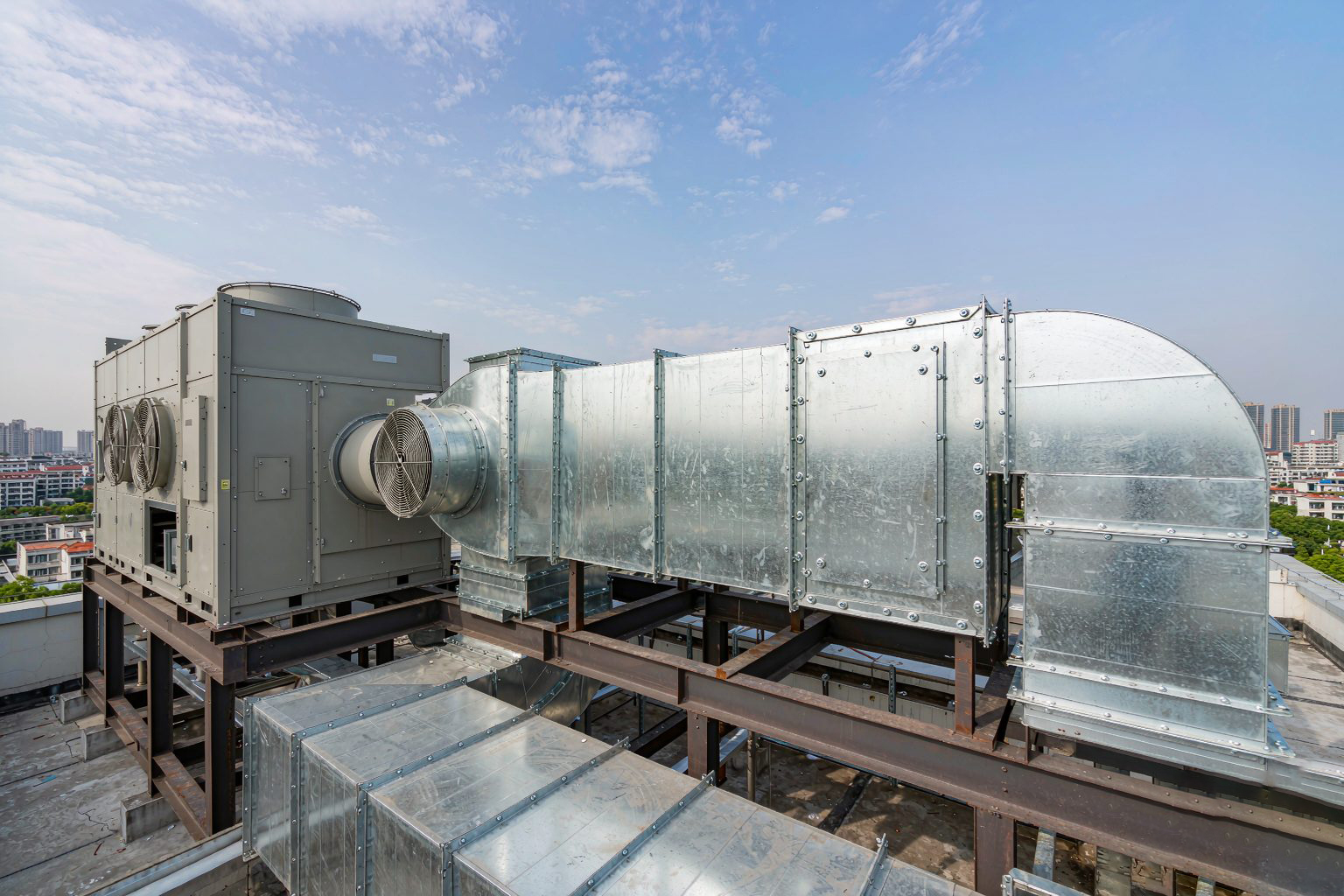
Rectangular duct silencer for central air-handling units and ventilation systems: splitter-type absorptive or combined reactive-resistive construction, 15–25 dB(A) dynamic insertion loss at ≤50 Pa pressure drop, air volumes 1,000–60,000 m³/h. Moisture-protected 80 mm glass-wool splitters suit condensing HVAC streams; flange sizes made to the duct.

Factory-direct supply · Custom-built to project specifications

Specifications

Type Splitter (resistive) / combined reactive-resistive / bend silencer
Insertion loss 15–25 dB(A), dynamic (with flow)
Pressure drop ≤ 50 Pa at rated air volume
Air volume 1,000–60,000 m³/h
Air velocity ≤ 10 m/s (6–8 m/s recommended against regenerative noise)
Splitters Perforated galvanized facing + 80 mm centrifugal glass wool, 48 kg/m³, moisture-wrapped
Casing 1.5–2.0 mm galvanized steel, flanged
Splitter spacing 100–200 mm
Effective length 900–1800 mm (doubling adds ≈5 dB low-frequency)
Connection Rectangular / round flanges to duct size
Fire rating A1 non-combustible, condensation-safe wrapping
Lead time 7–15 days

Product Overview

What it is and when to use it. When a central air-handling unit or ventilation fan runs, its noise travels down the duct and is re-radiated at every diffuser — the "whoosh" heard in offices and hotel rooms is duct-borne fan noise, not the machine itself. The standard cure is a duct silencer inserted right after the flexible connector at the unit discharge. HANWEI silencers are splitter-type: galvanized casing, parallel absorptive splitters dividing the airway into narrow passages — air flows through, sound is consumed. Dynamic insertion loss is 15–25 dB(A) at rated flow, with pressure drop held at ≤50 Pa, the number that matters most on HVAC projects because every pascal comes off the fan's external margin.

The triangle: attenuation, pressure drop, velocity. These three fight each other, and good selection balances all of them. Attenuation is set by the required room level per GB 50118 (30 dB night bedrooms, 40 dB offices) minus the unit's sound power and duct natural decay. Pressure drop is capped at 50 Pa in our designs; when the fan margin is tight we enlarge the cross-section rather than squeeze the airway. Velocity is the third gate: above 10 m/s between splitters, airflow itself generates regenerative noise and the silencer becomes a new source — we keep 6–8 m/s, adding a transition section where the duct is too small. Low-frequency-heavy units (large AHUs, slow centrifugal fans) get a combined reactive-resistive body whose expansion chamber pulls the 100–250 Hz boom down. Acceptance follows GB/T 4760 insertion-loss measurement, with the calculation sheet delivered alongside.

Moisture is the HVAC-specific killer. Cooling supply air condenses on duct surfaces, and unwrapped glass wool cakes within two seasons — absorption halved, wool sagging. Our splitters wrap the wool in water-repellent glass fabric and the facing carries an anti-condensation coating; on a two-unit comparison we visited years apart, the unwrapped competitor silencer could literally squeeze water from its wool. Field lessons also cover placement — always after the flexible connector (it cures structure-borne transmission) and never at a sharp bend — and sizing honesty: static lab values overstate real performance, so our datasheets quote dynamic (with-flow) figures, and pressure drop is written into the contract, not left off the quotation.

Frequently Asked Questions

Q: Will a silencer reduce the airflow of my AHU?

It consumes some fan pressure — that is why ours are engineered to ≤50 Pa at rated flow, which a normally sized AHU margin absorbs without noticeable diffuser loss. Selection always starts from the unit's external static pressure; tight-margin projects get a larger cross-section silencer that trades casing volume for pressure drop. Straight-tube silencers at full duct velocity often exceed 100 Pa — that is where airflow loss becomes visible.

Q: Where should the silencer be installed?

Right after the flexible connector at the unit discharge, before the main duct run — the noise level is highest there, so the silencer works at full efficiency. Supply and return sides both need treatment when both are noisy. The pairing of flexible connector (structure-borne) plus silencer (airborne) is fixed; one without the other leaves a path open.

Q: Why does my silencer whistle?

That is regenerative noise: above about 10 m/s between splitters, the airflow generates its own tone and the silencer becomes a source. The cure is velocity reduction — a transition section or wider splitter spacing. We select at 6–8 m/s for this margin; a whistling installation is almost always an undersized duct cross-section, usually accompanied by excessive pressure drop.

Q: Splitter type or combined reactive-resistive?

Decide from the spectrum: mid–high frequency "hiss" (most fresh-air and medium fans) needs only the resistive splitter type. A pronounced 100–250 Hz hum (large AHUs, slow high-volume fans) calls for the combined type whose expansion chamber targets low frequencies, at roughly 30% higher cost. Send the unit model and we will select from the measured spectrum — never upsell beyond what the spectrum justifies.

Need HVAC Duct Silencers for Your Project?

Send your drawings, noise data or site photos — our engineers return an itemized proposal the same day, in English.

Get a Free Quote → 📞 +86 18831881133