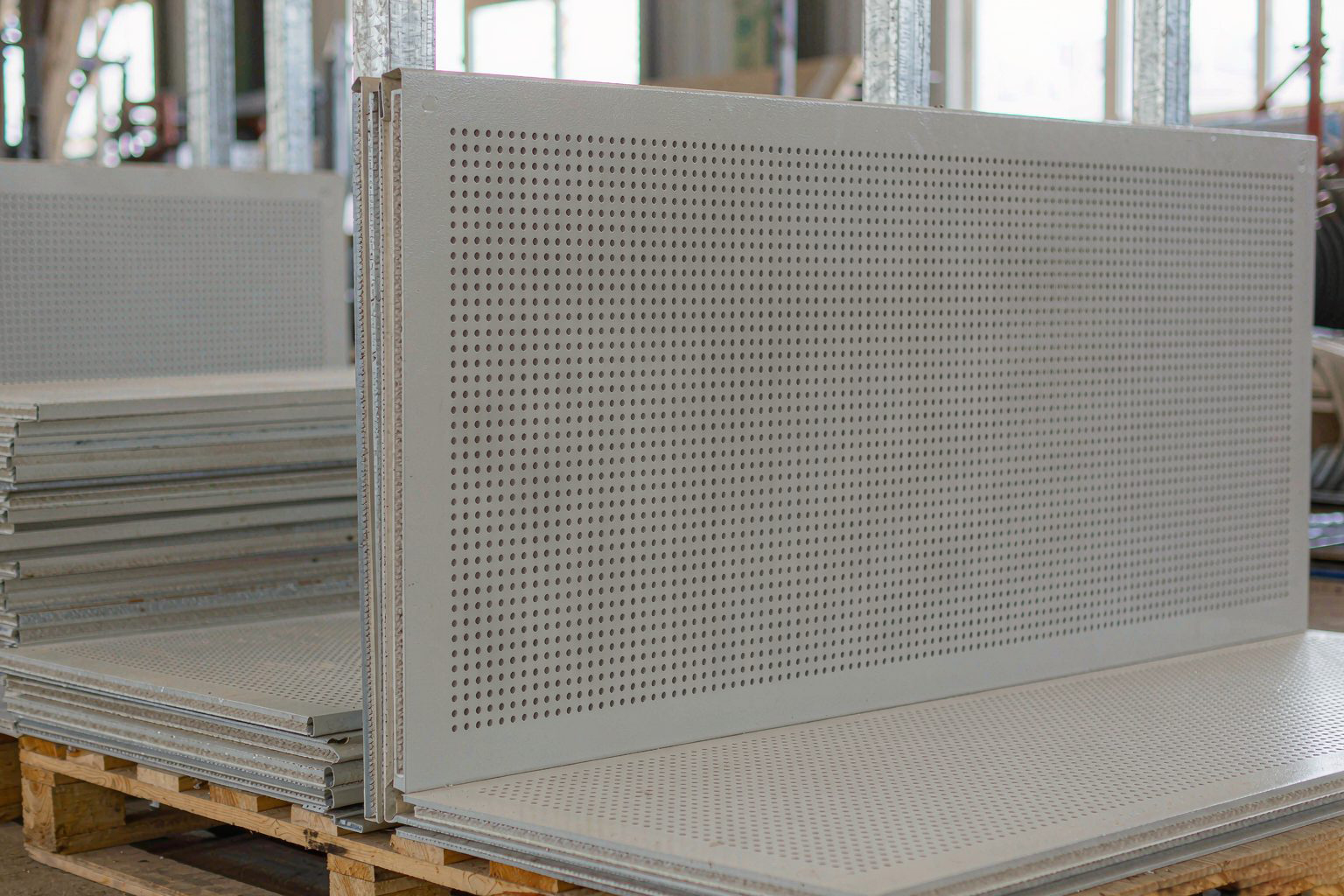
What it does. A perforated metal acoustic panel is the absorptive skin of almost every noise-control structure we build — the facing of barrier absorption sections, the inner lining of equipment enclosures, the wall treatment of plant rooms. It does not block sound; it eats it: sound passes through the holes into the glass-wool core behind and is dissipated as heat in the fibers. HANWEI supplies two forms: a single perforated facing (absorbing via the wall cavity behind it, NRC 0.6–0.7) and the composite panel — perforated facing + 80 mm centrifugal glass wool + sealed back plate — reaching NRC ≥ 0.85 and adding real insulation value. All panels are A1 non-combustible, hot-dip galvanized and powder-coated, rated 15–20 years outdoors.
Details that decide quality. Perforation ratio is the balance point: 20–25% gives strong mid–high absorption with enough remaining strength for barrier duty, while lower ratios suit decorative wall treatment. The wool is wrapped in water-repellent glass fabric — in outdoor service, unwrapped wool sheds fibers through the holes within a season and cakes when wet, halving its absorption. Sealed back plates turn the panel into a real acoustic unit. And cut edges: galvanizing is severed at every site cut, so we touch-up all cuts with zinc paint on site — the unpainted cut is the only place a panel rusts through in five years. Low-frequency problems are solved geometrically, not by thicker wool alone: deepening the rear cavity from the standard 80 mm to 100–200 mm moves the absorption peak down toward 250 Hz.
Verification and supply. Every batch ships with third-party test reports for NRC (reverberation-room method), A1 fire classification and coating thickness; barrier projects close with field insertion-loss measurement, indoor projects with reverberation-time comparison. Orientation matters and is written into the installation plan — the perforated face must point at the noise source, and the fastest site check is running a hand over the surface to feel the holes. Custom colors, oblong or louvered holes and non-standard panel sizes are all produced to the project framing grid; standard-size samples ship in three days.