🏭 HANWEI Noise Barriers · Factory Direct Supply 🌐 中文站 📞 +86 18831881133
📞 +86 18831881133Mon–Sun 8:00–20:00 (GMT+8)
PC Transparent Sound Panel

PC Transparent Sound Panel

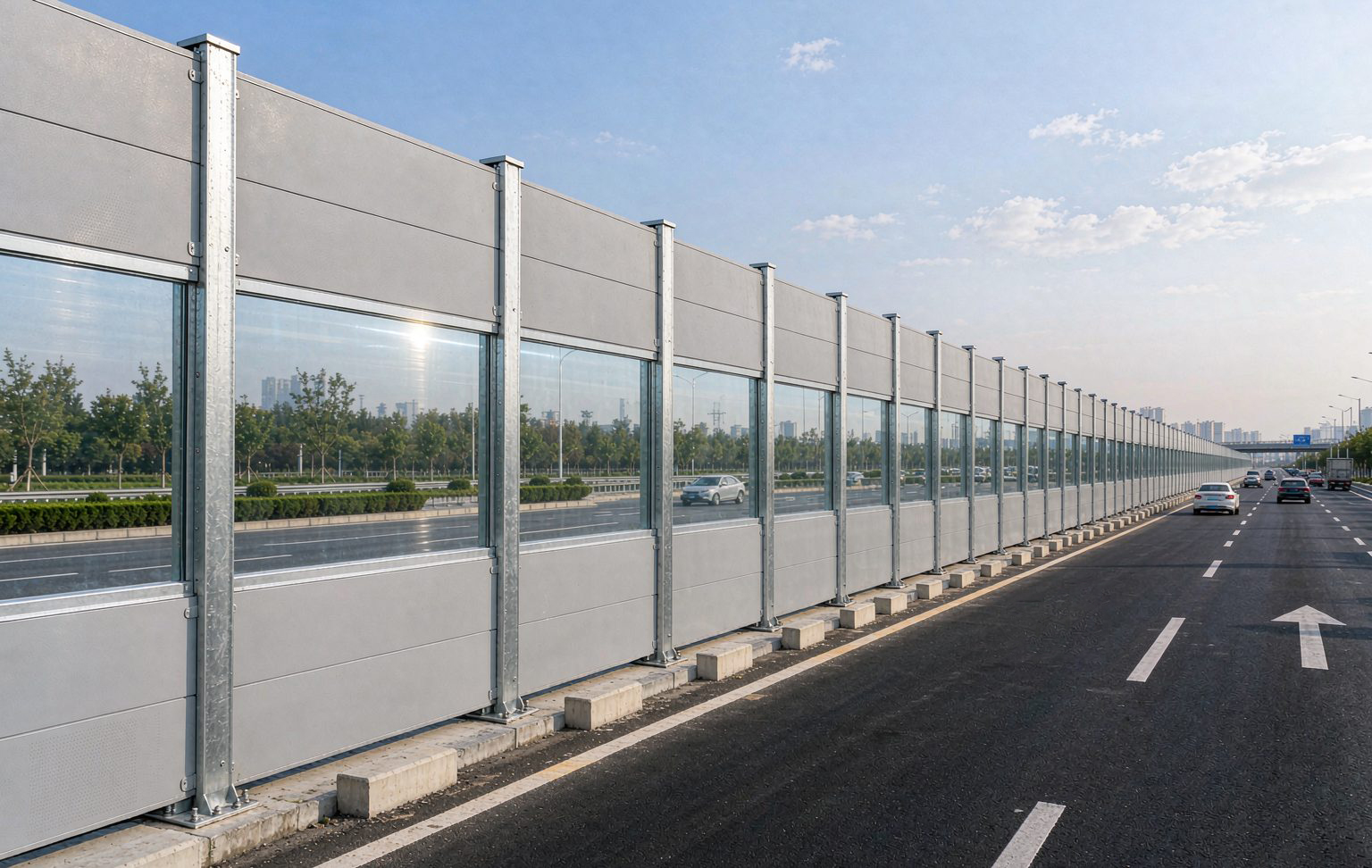
10 mm polycarbonate transparent sound panel with UV co-extrusion: weighted sound reduction Rw 31 dB, 88% light transmission, impact resistance 250 times that of glass at half the weight. Available in 5/8/10 mm with matching galvanized posts, for highway, viaduct and bridge barrier sections where sightlines matter.

Factory-direct supply · Custom-built to project specifications

Specifications

Thickness options 5 / 8 / 10 mm
Sound reduction index Rw 31 dB (10 mm)
Light transmission 88%
Impact resistance 250 × float glass, 30 × acrylic
UV protection Co-extruded UV layer, 10-year warranty on yellowing
Temperature range −40 °C to +120 °C
Density 1.2 g/cm³ (half of glass)
Standard panel size 2000 × 3000 mm, cut to project
Edge treatment Aluminum alloy clamping profiles + EPDM gaskets
Thermal expansion 0.065 mm/(m·°C) — expansion slots required
Fire rating B1 (self-extinguishing)
Lead time 5–10 days

Product Overview

Conclusion first. A PC transparent sound panel is the right choice wherever a noise barrier must not block sightlines or daylight: urban viaducts and ramps where drivers need road visibility, bridge sections where the barrier doubles as a wind screen, residential stretches where a fully metal wall would trigger complaints about blocked views, and factory boundaries where the client wants the production area visible. The 10 mm panel delivers Rw 31 dB with 88% light transmission, weighs half of laminated glass of the same thickness, and withstands impact 250 times better than float glass — stone-chip and vandalism proof in practice.

Material details that decide service life. Our panels are dual-side UV co-extruded: the UV layer is not a coating but a 50 μm co-extruded cap that cannot peel, keeping light transmission loss within 5% over 10 years. Panels are supplied with protective film and cut-to-size service. The critical installation detail is thermal expansion — polycarbonate expands 0.065 mm per meter per degree Celsius, so clamping profiles must leave the specified expansion slots; forcing rigid seals is the number-one cause of panel bowing. We supply matched aluminum clamping profiles with EPDM gaskets and verify the clamping torque on site. Panels should be stored shaded until installation; prolonged outdoor storage with the film on in summer sun bakes the film onto the surface.

Application experience. On expressways we pair a mid-band of PC panels with metal absorptive sections above and below — the combination keeps sightlines while the metal sections carry the absorption, and costs far less than a fully transparent barrier. On viaducts the panels are clamped to posts outside the crash barrier with anti-drop design; on factory boundaries a lower metal band (0.8–1 m) is recommended because a fully transparent wall lacks the absorptive layer and loses 1–2 dB of insertion loss. Cleaning is plain water with a neutral detergent — no alkaline solvents or dry wiping, which mar the surface.

Frequently Asked Questions

Q: Will the panel yellow over the years?

Not with a co-extruded UV layer. Our panels carry a 50 μm co-extruded UV cap on both faces — it cannot peel like a spray coating. Light transmission drops less than 5% in 10 years of outdoor exposure. Cheap coated panels yellow within 2–3 years; the difference is visible in the cross-section under a lamp.

Q: How does it compare with laminated glass?

Rw is similar at equal thickness (31 dB vs 33 dB), but PC weighs half, costs far less, and is 250 times more impact-resistant — it bends under stone impact instead of shattering. Glass wins on scratch hardness only. For noise barriers, PC is the mainstream choice worldwide.

Q: What thickness should I choose?

5 mm for low screens on factory boundaries, 8 mm for standard highway mid-bands, 10 mm where Rw ≥ 31 dB and heavy wind-zone clamping is required. Tell us the barrier height and wind zone and we will confirm the thickness and post spacing in the drawing stage.

Q: How is the panel fixed to the posts?

Through aluminum clamping profiles with EPDM gaskets bolted to the galvanized posts. The profile system must leave the specified expansion slots per panel edge — rigid gluing or welding is prohibited. We supply the complete clamp-and-post kit matched to the panel thickness.

Need PC Transparent Sound Panels for Your Project?

Send your drawings, noise data or site photos — our engineers return an itemized proposal the same day, in English.

Get a Free Quote → 📞 +86 18831881133