🏭 HANWEI Noise Barriers · Factory Direct Supply 🌐 中文站 📞 +86 18831881133
📞 +86 18831881133Mon–Sun 8:00–20:00 (GMT+8)
Sound Barrier Post (Hot-Dip Galvanized H-Section Steel Post)

Sound Barrier Post (Hot-Dip Galvanized H-Section Steel Post)

🏢 HANWEI Sound Barrier ✍️ Li Gong · Senior Engineer 📅 2026-10-20

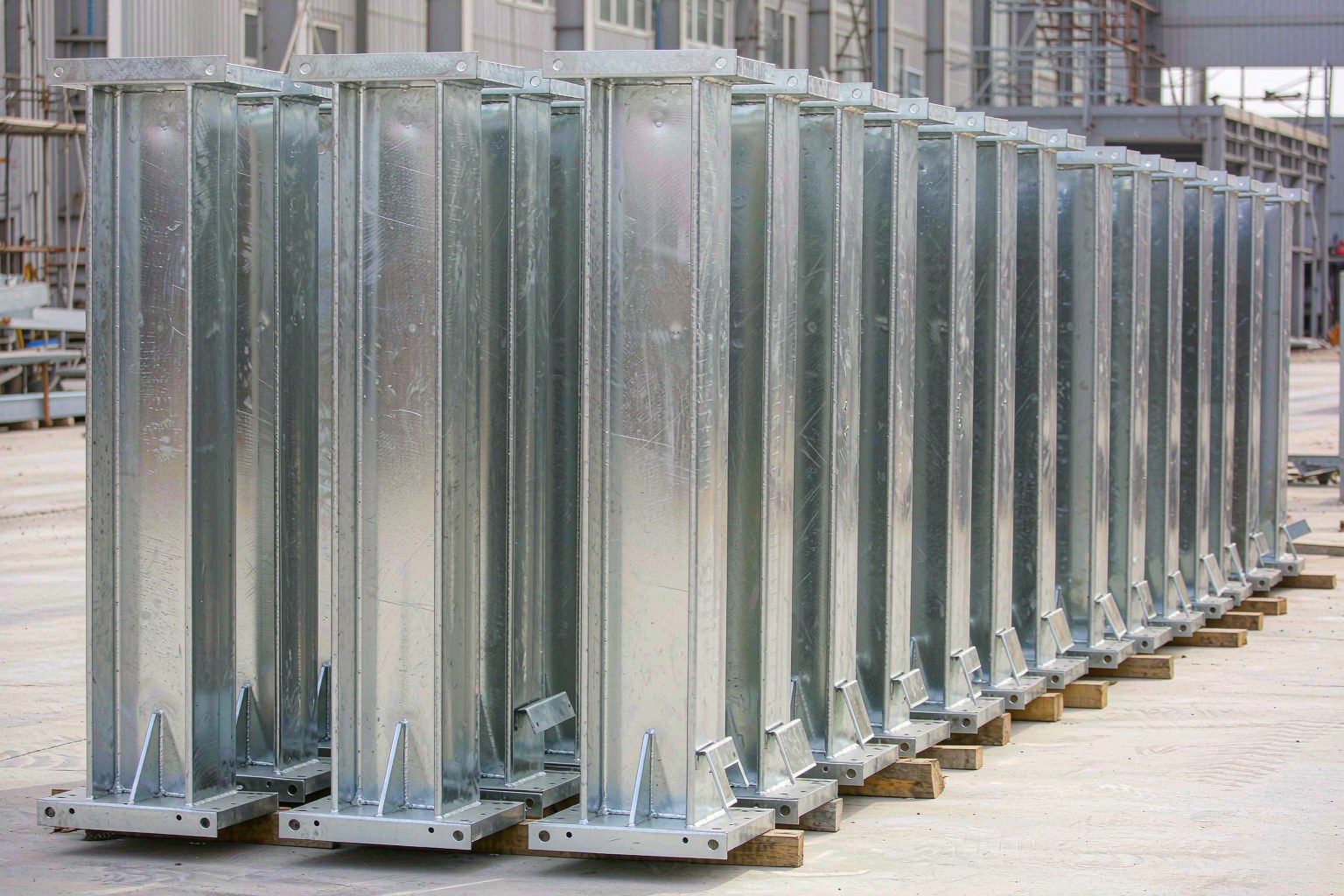
Load-bearing H-section steel posts for highway, railway and industrial noise barriers: Q235B/Q355B beams cut full-length, shop-welded flange bases with triangular gussets, and whole-member hot-dip galvanizing to GB/T 13912 (coating ≥ 85 μm average) for 25+ years of weathering. Sections from H100×100 to H250×250, standard spans of 2~2.5 m, every post wind-checked to the site's basic wind pressure per GB 50009 — because the post carries one hundred percent of the safety.

Factory-direct supply · Custom-built to project specifications

Specifications

Column Material Hot-rolled H-section steel Q235B / Q355B (for high wind-pressure and heavy-load conditions)
Common Specifications H100×100, H125×125, H150×150, H175×175, H200×200, H250×250
Column Height 1.5–8 m, customized to barrier panel height + flange section / embedded section
Corrosion Protection Process Full hot-dip galvanizing, average zinc coating thickness ≥85 μm (GB/T 13912)
Corrosion Protection Service Life ≥25 years (standard atmospheric environment; up to 30 years with an additional coating system in heavy industrial zones)
Base Connection Flange base plate + triangular stiffener ribs + anchor bolts; or pre-embedded type
Base Plate Specification Configured per column type and loading; bolt holes CNC-drilled (hole-position tolerance ±1 mm)
Standard Span 2–2.5 m (calculated based on wind load and panel weight)
Wind Load Verification Per GB 50009, using local basic wind pressure; design range 0.4–1.0 kN/m²
Panel Connection Slot spacing on both sides reverse-calculated from as-built panel dimensions; no on-site cutting required
Delivery Lead Time 10–18 days

Product Overview

The post everyone forgets carries everything

In barrier projects, attention goes to the panels — how many decibels, what color — while the post gets barely a glance. Yet the post is what decides whether a barrier stands: panels only hang on it, while the post alone resists the wind pressure on every square metre, the full panel weight, and years of wind-induced fatigue. A failed panel degrades performance; a failed post is an accident. Highway barriers are blown over somewhere almost every year, and the post-mortem usually finds an under-sized section, a thin zinc coat, or an anchor detail that never matched the load. We build complete barriers, so our post standard equals our panel standard: hot-rolled H-sections cut full-length (Q235B, Q355B for heavy duty), flange plates and triangular gussets jig-welded in the shop with welds accepted to GB 50205, and whole-member hot-dip galvanizing to GB/T 13912 at 85 μm average — rust-free for 25 years in ordinary atmospheres. Sections H100×100 through H250×250 from stock, standard spans 2~2.5 m, special spans and heights calculated to order. Posts alone or posts with panels, each delivery carries the material certificate and zinc-coating report. Hotline +86 18831881133.

Sized by wind, not by appearance

Post selection is a structural calculation, not a feeling. Three loads combine: panel wind pressure (per GB 50009 at the site's basic wind pressure — 0.8~1.0 kN/㎡ in typhoon-prone coastal zones, 0.4~0.6 kN/㎡ inland), panel dead weight, and construction loads; the combination gives the moment at the post base. The moment fixes the section: the same 2.5 m barrier takes an H125×125 inland but may need an H175×175 on the coast, with spans tightened from 2.5 m to 2 m — same panels, more posts. Deflection closes the check: top movement under wind is limited to 1/200 of post height, because a flexible post twists the panel slots until they rattle or release. Every complete barrier we quote carries this calculation, and we run it free for post-only buyers — send barrier height, span and the project city, and the selection sheet comes back with the numbers shown.

Galvanizing is the floor, not a feature

A post's life is its coating's life. Barrier posts live outdoors permanently; paint-only protection starts staining rust within three years in humid, salty or de-icing-salt environments, and the white rust streaks down onto the panels ruin the whole barrier's face. We galvanize the whole member: after pickling, the steel is immersed in molten zinc so the coating bonds metallurgically — corners, welds and internal cavities included — at 85 μm average per GB/T 13912's severe-exposure class, maintenance-free for 25+ years. Coating thickness is measured, not sprayed on: every batch ships with a zinc-thickness test report, verified by magnetic gauge sampling. Heavy-industrial, coastal and de-icing-salt sites move to 100 μm+ or a duplex galvanizing-plus-fluorocarbon system for 30 years. One more detail most suppliers miss: the flange face against the concrete sits permanently damp and rusts first — ours get extra-thick zinc or a bituminous coat underneath.

Precision: a post 1 mm off costs an afternoon

The post is both structure and setting-out: each panel's two side slots must engage two neighbouring posts at once, and a pitch error over 3 mm means the panel does not fit — so the fitters cut it with an angle grinder, and the cut edge rusts from the day it is made. We control precision in the factory: base-plate holes CNC-drilled to ±1 mm against the anchor setting-out drawing, flange faces machined flat (an uneven flange twists the post as the bolts tighten), slot spacing reverse-engineered from measured panels, and the finished member straightened after welding. On site the kit is complete — anchor bolts, positioning template, levelling nuts — the embedments cast true off the template, and after erection each post is levelled, torqued and checked for verticality within 1/500 of height. For retrofits reusing existing anchors, measure the old bolt pitch and send it: the base plate is drilled to match the field, not the drawing. Drawings and reality never agree on retrofit projects — we measure the reality.

Three failures we have seen, so you do not repeat them

Sized by gut, flattened by wind. A campus barrier built on light posts "to save a grade" lost forty-odd posts in one force-10 gust; the repair and re-panelling cost ten times the saving. Take the wind pressure from the table. Zinc at 40 μm, rust at year three. The low-bid posts measured less than half the required coating; by year three the streaks ran down every panel and the owner refurbished the whole line. 85 μm is the floor — bring a thickness gauge to acceptance. Slots 5 mm apart from the panels. Posts and panels from two suppliers, both "per drawing", cost three hundred cut panels on site and a rust creeping from every cut edge a half year later. One source for posts and panels, slots reverse-engineered from the panels — that is how we deliver.

Selection in three steps

Section: barrier ≤ 3 m in ordinary inland wind, start at H125×125; 3~5 m or coastal, H150×150~H175×175; above 5 m or typhoon zones, H200×200 and up with the foundation re-checked. Span: 2~2.5 m standard; 2 m close pitch where the streetscape matters — denser posts can be lighter. Base: flange + anchors for new builds (level-able, replaceable); embedded type where the check is tight or the soil is poor. Send barrier height, span and city; the selection sheet with local wind pressure comes back the same day, with certificate samples attached. Hotline +86 18831881133.

Frequently Asked Questions

Q: How do I select the post, and what steel grade?

Three numbers decide it: barrier height, span, and the site's wind pressure. Sections run H100×100 to H250×250: below 3 m inland, H125×125; 3~5 m or coastal, H150×150~H175×175; above 5 m, H200×200 and up with the foundation re-checked. Q235B is standard, Q355B for high-wind heavy duty. Send height, span and city — the selection sheet comes back calculated to GB 50009 at your local basic wind pressure, with the working shown, and the same sheet travels with the delivery for acceptance.

Q: How long does hot-dip galvanizing last?

25+ years in ordinary atmospheres: the coating averages ≥ 85 μm per GB/T 13912 and bonds metallurgically to the steel, covering corners, welds and cavities, with no maintenance in normal service. Heavy-industrial, coastal and de-icing-salt environments should step up to 100 μm+ or a duplex galvanizing-plus-fluorocarbon system for 30 years. The dampest, fastest-rusting spot is the flange face against the concrete — ours carry extra zinc plus a bituminous coat. Every batch ships with a thickness test report; gauge it on arrival and reject the batch if the numbers do not hold.

Q: What do posts cost — by ton or by piece?

Both. Standard sections price by ton; small batches and special sections are easier quoted per post. Three variables drive the number: section size, galvanizing class (85 μm standard vs 100 μm enhanced), and base-plate/gusset welding configuration. On a typical H125×125 barrier at 2.5 m spans, posts run about one fifth of the barrier cost. For a quotation we need barrier height, span and city — the wind-load selection comes with it. A post priced without a wind check is cheap exactly where it matters.

Q: How do posts and panels fit together? What if the slots do not match?

Slot spacing is reverse-engineered from the measured panels and roll-formed to a single consistency, so panels hang without site cutting. The failure mode is two suppliers — posts from one, panels from another, both "to drawing": millimetres apart on paper, and on site the panels get ground down, leaving unprotected cut edges that rust from the corner inward. We supply posts and panels from one source with one set of measured data. If your panels came from elsewhere, measure the slot pitch and send it — we drill and form to the field, not to the drawing.

Q: What about the foundation — embedded or flanged?

Each has its ground. Flange + anchor bolts: embedments cast once off a positioning template, posts level-able and replaceable individually — the default for new roads. Embedded: the post shaft casts into the foundation, stiffer and lighter on steel, but with little levelling margin and no post replacement without breaking concrete — for tight structural checks or poor soils. Either way the concrete grade, footprint and anchor depth follow from the base moment; our selection sheet includes foundation reinforcement guidance. A perfect post on a soft foundation still falls — send the geotechnical report number and we close that loop too.

Q: Can we replace posts and keep the existing panels?

Yes, and it is common. Two things make it work: anchor reuse — measure the existing bolt pitch and size, and the new base plate is drilled to the field, no foundation works; slot matching — new posts formed to the old panels' measured pitch. One more check matters: why the old posts failed. Posts damaged by wind were almost certainly under-selected, so the replacement must be recalculated to the local wind pressure — otherwise you have bought the same fall twice. Send the old post section, panel slot pitch and anchor layout; we return an adaptation drawing for confirmation before production.

Q: Lead time? Can you do special sections?

Standard sections H100×100~H200×200 ship in 10~18 days, with common profiles stocked and 7-day dispatch for urgent projects. Corner posts, long-span reinforced posts, curved landscape posts and Q355B heavy sections are made to order with 5~10 extra days and a wind-load calculation first. Large orders can split-ship: posts first so foundation works proceed, panels to follow — the two trades never wait on each other. Send drawings or parameters; feasibility and schedule come back within 24 hours. Hotline +86 18831881133.

Need Sound Barrier Post (Hot-Dip Galvanized H-Section Steel Post)s for Your Project?

Send your drawings, noise data or site photos — our engineers return an itemized proposal the same day, in English.

Get a Free Quote → 📞 +86 18831881133
Why Us

8 Reasons to Choose HANWEI

13-year noise-control source factory · Fully responsible from survey to acceptance

01
🏭

Direct Factory Supply

Own factory with 5,000㎡ daily capacity — galvanized steel, aluminum and acoustic panels all produced in-house. No middlemen, no markups.

02
📐

Free Site Survey

Engineers visit with sound level meters to measure actual noise values, delivering dB data and reduction-target reports your plan can stand on.

03
🎯

One-Stop Custom Solution

Acoustic design, structural calculation, manufacturing, installation and acceptance completed under one roof — no juggling multiple vendors.

04
🛣️

Nationwide Installation

Coverage across all 31 provinces of China, with proven experience on highways, railways, factory boundaries, bridges and cooling towers.

05
🔬

Certified Acoustic Performance

Composite barrier noise reduction of 10–25dB(A), NRC≥0.85 absorptive panels, third-party test reports shipped with every order.

06
🏅

Full Qualifications

ISO triple-system certification and environmental-engineering credentials ready for bidding documents and project acceptance.

07
🛡️

5-Year Warranty

5-year structural warranty; wind-load design calculated to the local 50-year wind pressure; lifetime maintenance response.

08
⚡

Fast Delivery

Mold-based production of standard parts: 7–15 days to ship regular orders; double shifts arranged for urgent projects.